
International Conference on
EMERGING TECHNOLOGIES IN UTILITY TRANSFORMATION FOR SUSTAINABILITY AND AUTONOMOUS VEHICLES
(ETUTSAV – 2026)
6th & 7th , April 2026
Organized by
Department of Electrical and Electronics Engineering
B V Raju Institute of Technology, Vishnupur (Hyderabad), Narsapur, Medak, Telangana
Conference Registration
Scan the QR code to register or view the conference brochure for full details.

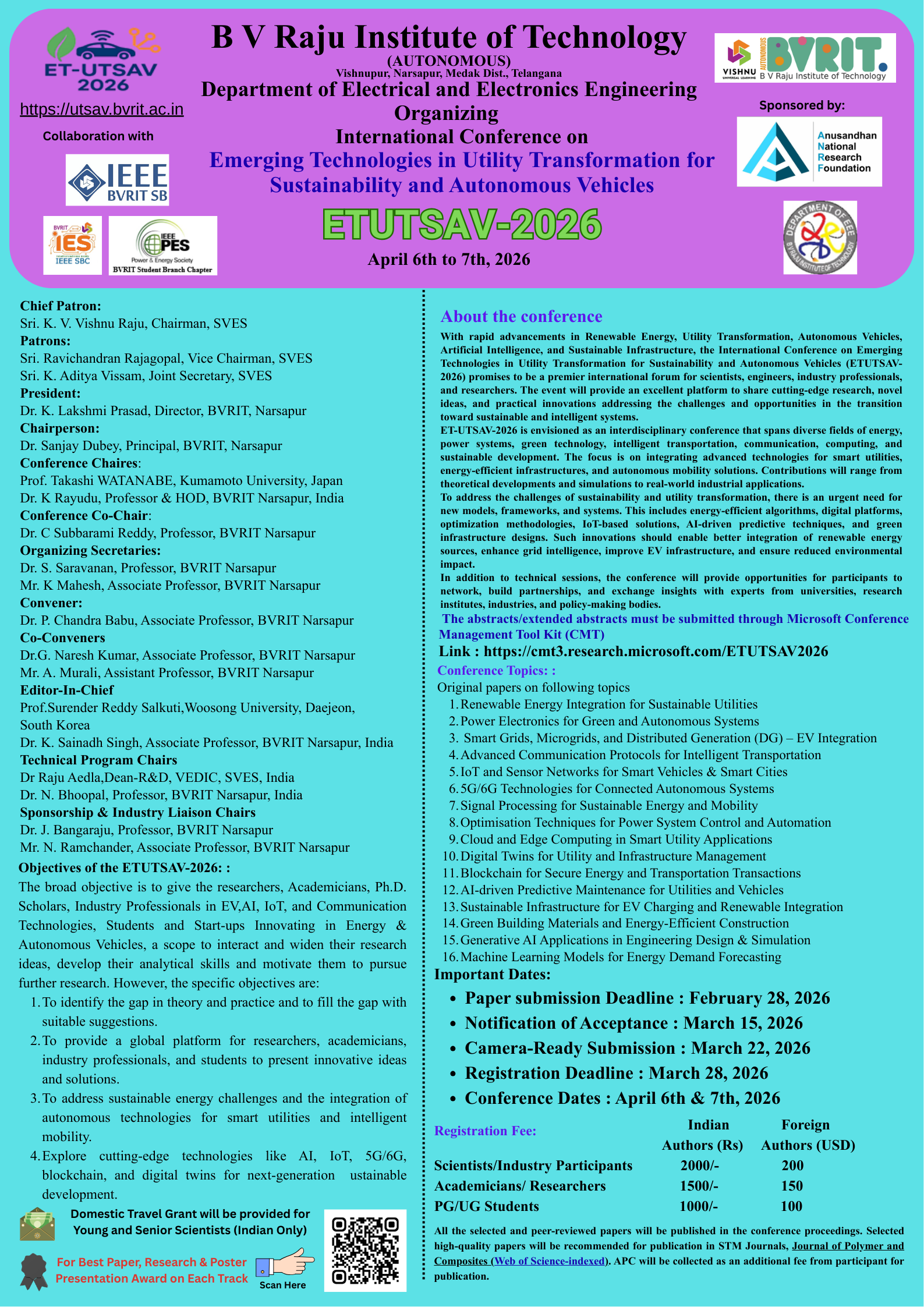
Sponsored by Anusandhan National Research Foundation (ANRF)
This conference is sponsored by Anusandhan National Research Foundation (ANRF).
The ANRF aims to seed, grow, and promote research and development (R&D) and foster a culture of research and innovation throughout India’s universities, colleges, research institutions, and R&D laboratories.
About the conference:
The event will provide an excellent platform to share cutting-edge research, novel ideas, and practical innovations that address the challenges and opportunities in the transition toward sustainable and intelligent systems.
ET-UTSAV-2026 is envisioned as an interdisciplinary conference that spans diverse fields including energy, power systems, green technology, intelligent transportation, communication, computing, and sustainable development. The primary focus is on integrating advanced technologies for smart utilities, energy-efficient infrastructures, and autonomous mobility solutions. Contributions will range from theoretical developments and simulations to real-world industrial applications.
To tackle the pressing challenges of sustainability and utility transformation, there is an urgent need for new models, frameworks, and systems. This includes the development of energy-efficient algorithms, digital platforms, optimization methodologies, IoT-based solutions, AI-driven predictive techniques, and green infrastructure designs. Such innovations will enable better integration of renewable energy sources, enhance grid intelligence, strengthen EV infrastructure, and minimize environmental impact.
Objectives of the ETUTSAV-2026:
Objectives of ET-UTSAV-2026
• To provide a global forum for knowledge exchange on emerging technologies in sustainable utilities and autonomous vehicles.
• To encourage collaboration between academia, industry, and research organizations for developing innovative solutions.
• To foster the adoption of AI, IoT, 5G/6G, blockchain, cloud computing, and digital twins in energy and transportation domains.
• To highlight practical case studies and real-time applications that support smart city and green mobility initiatives.
• To promote sustainable research directions that align with the United Nations Sustainable Development Goals (SDGs).
ET-UTSAV-2026 aims to disseminate novel ideas, emerging trends, and groundbreaking results across its specialized tracks. The conference welcomes original and high-quality contributions, including theoretical research, practical implementations, and experimental studies.In addition to technical sessions, the conference will provide opportunities for participants to network, build partnerships, and exchange insights with experts from universities, research institutes, industries, and policy-making bodies.The organizing committee looks forward to welcoming you to ET-UTSAV-2026 at BVRIT Narsapur on April 6th & 7th, 2026, with your valuable contributions that will shape the future of sustainable utilities and autonomous technologies.
About BVRIT
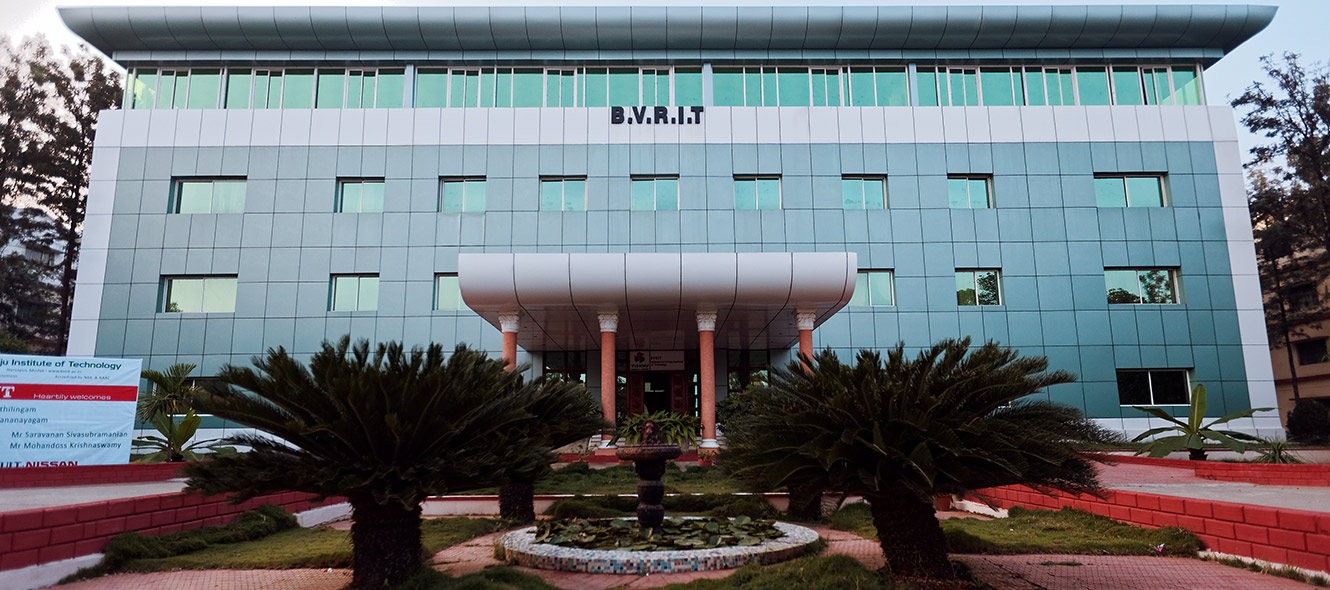
The threshold of the Orchard Park Campus leads to an abode of infinite learning possibilities for future global leaders. Spread across 110 acres, the sprawling campus with its state-of-the-art learning facilities opens a world of impeccable opportunities for students. The well-built temples of learning and a motivated teaching community reflect the strong determination of the leadership team to provide high-quality education to future technocrats. The extensive collection of books fosters an insatiable thirst for knowledge and wisdom, while the pond amidst greenery adds a serene touch to this epitome of learning. With nature as its backdrop, this scenic spot inspires creativity among minds with cameras and canvases. Away from the hustle and bustle of the city, it offers an opportunity to dive into an ocean of knowledge — BVRIT Narsapur. B. V. Raju Institute of Technology (BVRIT) was established in 1997 by the eminent philanthropist (Late) Padmabhushan Dr. B. V. Raju, under the aegis of the Sri Vishnu Educational Society (SVES). The institute was granted UGC – Autonomous Status in 2014. It is duly approved by the AICTE and the Government of Telangana State, and is affiliated with JNTU, Hyderabad.The CSE, IT, ECE, EEE, Chemical, Mechanical, and Civil Engineering branches at BVRIT are accredited by the NBA, and the institute itself is accredited by the NAAC with an A+ grade. The institution is guided by a distinguished body of professionals from IITs, the engineering sector, and government organizations, led by Sri K. V. Vishnu Raju Garu, a graduate in Chemical Engineering from REC, Trichy, and a postgraduate from Michigan Technological University, USA. The purpose of establishing BVRIT was to provide quality technical education in an ideal environment that supports the holistic development of students. Under the visionary leadership of our Chairman, Sri K. V. Vishnu Raju, BVRIT has made a quantum leap in reputation through its best teaching-learning practices, high-quality student intake, excellent infrastructure, and consistent record of outstanding placements.
About EEE Department
The EEE curriculum emphasizes both depth and breadth within the sub-disciplines of Electrical Engineering. All students will specialize in electronic circuits and devices while being provided the opportunity to explore signals and systems theory, electrical machines, control systems, power systems, power electronics, integrated circuits, energy systems, computer software and hardware, as well as mechanical, biological, and environmental systems.
Through this coursework, students also gain experience in the engineering design process — the engineering activity that requires creative synthesis as well as analysis.
The Department has been structured with experienced staff and excellent laboratory facilities to equip students with knowledge of cutting-edge technologies and provide adequate hands-on experience through laboratory work, innovative projects in industry and research establishments, seminars, and workshops.
Modern research and innovative teaching are trademarks of the department. We offer exceptional research facilities together with outstanding classroom instruction. With an abundance of teaching and research expertise, our faculty members strive to provide the best possible education. The department fosters active industry–institution engagement through supported research initiatives and consultant assistance.
The major research areas include AI applications to power systems, demand side management systems, application of soft computing methods in power systems, IoT applications in electrical engineering, reliability analysis of PV inverters, grid integration of solar PV systems, modelling of power converters for PV power conversion, soft computing techniques and applications to power electronics, electric vehicle charging infrastructure, real-time monitoring & data analysis of a campus distribution grid, and smart distribution systems.
The Department of Electrical & Electronics Engineering has started the B. Tech Program in the year 1997 with the intake of 40 and the current intake is 60. Department offers a two-year full-time M. Tech program in Electrical Power Systems from the academic year 2012–2013. The intake has been revised to 12 from the academic year 2023–24. The Department also offers a two-year full-time M. Tech program in Electrical Vehicle Technology from the academic year 2023–2024 with an intake of 12, admitted through GATE / TSPGECET, the common entrance test, for both PG programs.
The Electrical and Electronics Engineering Department in BVRIT, established in 1997 with an intake of 40.
Granted provisional accreditation for three years for the period 10.02.2009 to 10.02.2012.
Granted provisional accreditation for two years for the period 08.11.2013 to 08.11.2015.
Granted provisional accreditation for three years for the period 01.05.2017 to 01.05.2020.
Granted provisional accreditation for three years for the period 01.07.2022 to 30.06.2025.
JNTUH recognized the Department of Electrical and Electronics Engineering as a Research Centre for the period of 3 years from 2022–2025.